

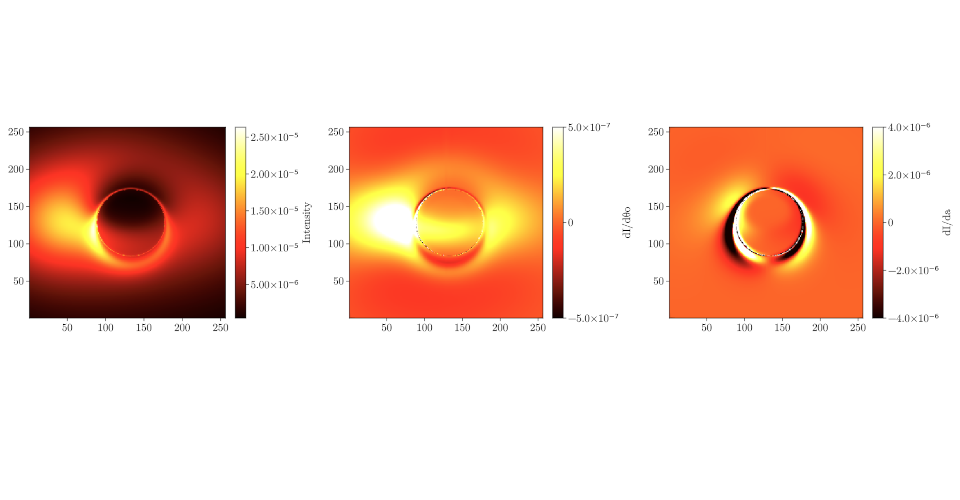
Black hole imaging simulation with Jipole
Pedro Naethe Motta
1 / 8
5 / 8
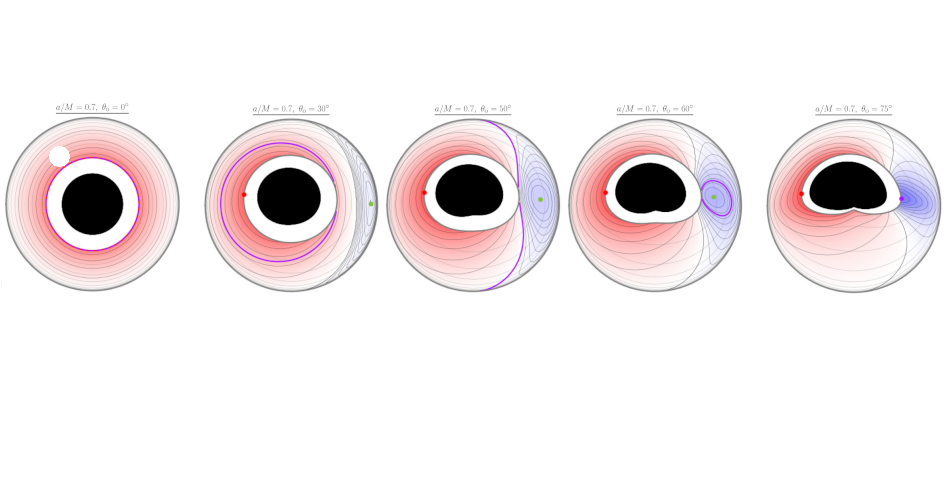
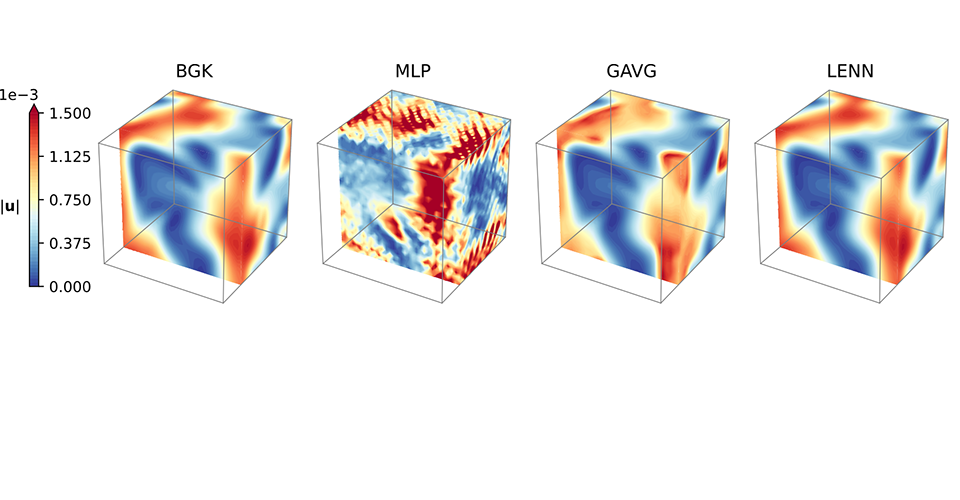
Machine learning soft matter dynamics
Charlie Young
Charlie Young

7 / 8
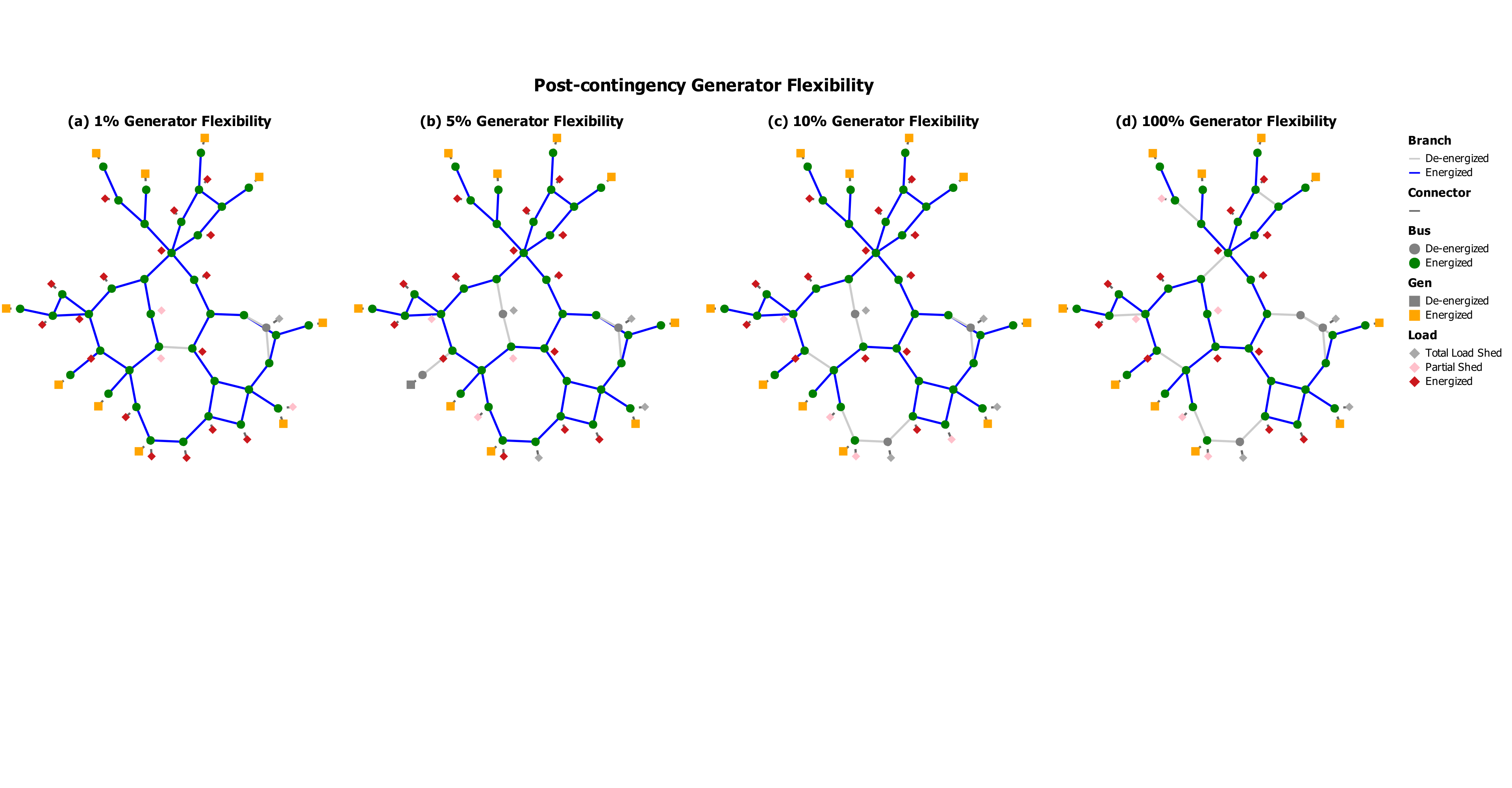
Tsunami modeling
Shane Coffing
Shane Coffing
About the center
What is CNLS?
The Center for Nonlinear Studies (CNLS) is part of Los Alamos National Laboratory's Theoretical Division. Since its formation in October 1980, the Center has organized and supported research focused on nonlinear and complex-systems phenomena.
Our purpose
CNLS Mission
- Identify and study complex nonlinear phenomena using statistical physics, nonlinear science, applied mathematics, and numerical simulation.
- Promote the application of scientific results to important research challenges.
- Stimulate interdisciplinary approaches to complex problems.
- Facilitate the exchange of scientific results and ideas between Laboratory scientists and external centers of excellence.
- Encourage exploration at the interfaces between conventional disciplines.
- Support interdisciplinary science that underpins the Laboratory's national-security mission.
What's happening
Calendar Items
Talks this week
| Mon 10:00 AM - 11:00 AM Dr. Alexandre Martin (University of Kentucky) Seminar: **Distinguished Visiting Engineer Seminar Series** Thermal Protection System Modeling: Capabilities, Usage and Validation |
| Wed 11:00 AM - 12:00 PM Alberto Perez (University of Florida) Seminar: Scaling Biomolecular and Peptide Discovery with AI and Physics-Based Modeling |
| Wed 1:00 PM - 2:00 PM Georgiy Bondar (University of California Santa Cruz) Seminar: Transporting Uncertainty: Learning and Control through Optimal Transport |
| Thu 2:00 PM - 3:00 PM Nahuel Diaz Postdoc Seminar: Generalized entanglement and quantum information in the age of AI |
Talks next week
Visitors this week
Visitors next week
Recent Arrivals
- CNLS welcomes Ulam Scholar Andrea Bertozzi (Jul. 14th, 2026) from Univeristy of California Los Angeles.
- CNLS welcomes Ulam Scholar Greg Huber (Jun. 17th, 2026) from UCSF.